.png)

Deliverables: research plan, affinity map, and interview synthesis
Job search platforms promise efficiency, but many job seekers talk about feeling overwhelmed, discouraged, or disengaged after applying to only a handful of roles. Currently, job seekers have to use many third party resources and tools such as Google Calendar/Sheets, Notion, Excel, and Reminder applications attempting to stay organized and track their job application process. This UX research study set out to understand where the experience breaks down by conducting four user interviews across different cities to conduct qualitative research revealing critical gaps in job search platforms.
I recruited recent and soon-to-be graduates and early-career professionals ages 21-30 that utilized multiple job platforms. More often, they were underemployed/unemployed and actively searching for 3+ months and were across different career stages, such as searching, interviewing, sorting through offers. I crafted a discussion guide with open-ended questions designed to help the conversation flow and be consistent.
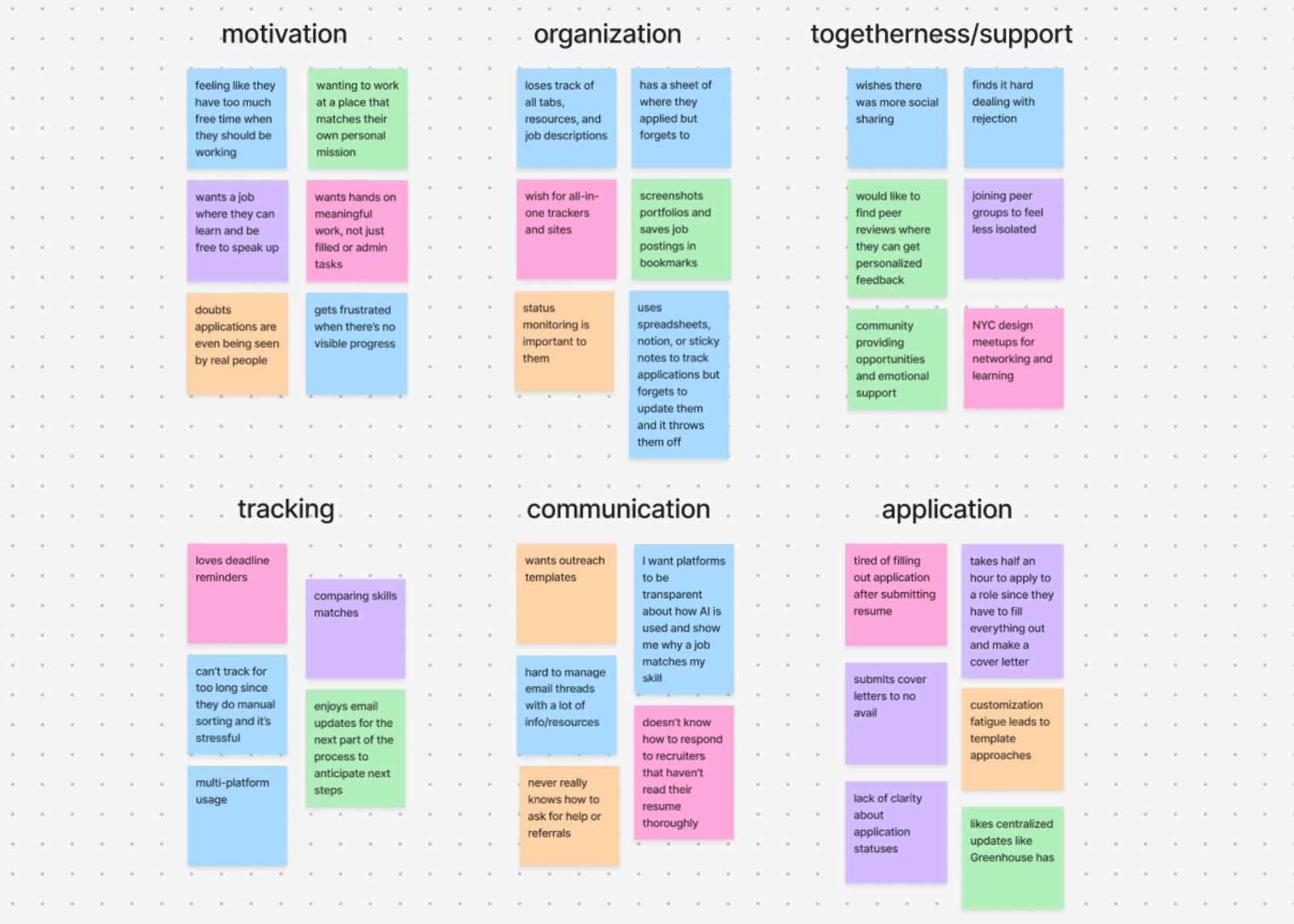
I reviewed interview notes, analyzying preferred websites and platforms for job searching and networking and any systems they use to sort and organize. Overall, users will go through morning bursts of searching where they're feeling really good and energized while attending virtual/in-person meetups and courses. But by evening, they're stressed trying to apply to more jobs using a volume-based approach due to low response rates in an attempt to end off on a good note.
Problem 1: Emotional burnout - job seekers feel the emotional toll of the search, especially the longer it goes on
“Do I upskill, keep applying, or somehow get a referral?”
Problem 2: High volume applications - participants complained of companies taking down their job descriptions and calling for interviews and not having any idea of what they may have applied to
“Lowkey, I find myself forgetting what I applied to and didn’t.”
Problem 3: Tracking Overwhelm - participants use different tracking systems but found them hard to keep up with
“I have a platform I use, but it’s not optimized for tracking and once I forget to update it, it becomes a mess.”
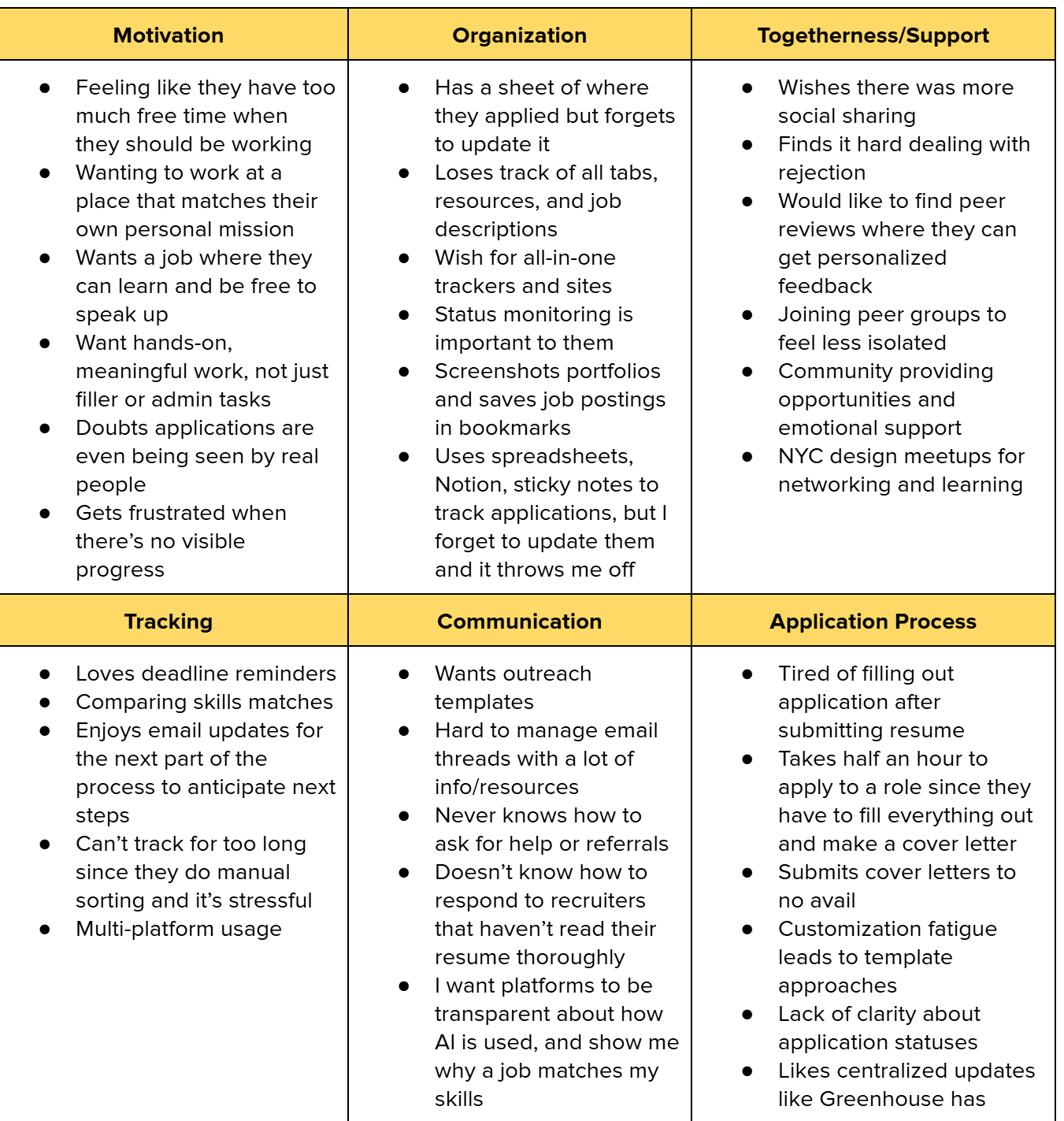
During these interviews, there were noticeable trends where people were wondering if they were wasting time looking for and applying to jobs that weren't a strong fit. All interviewees felt that the job search is emotionally taxing and some have been feeling burnt out from all the applying and networking.
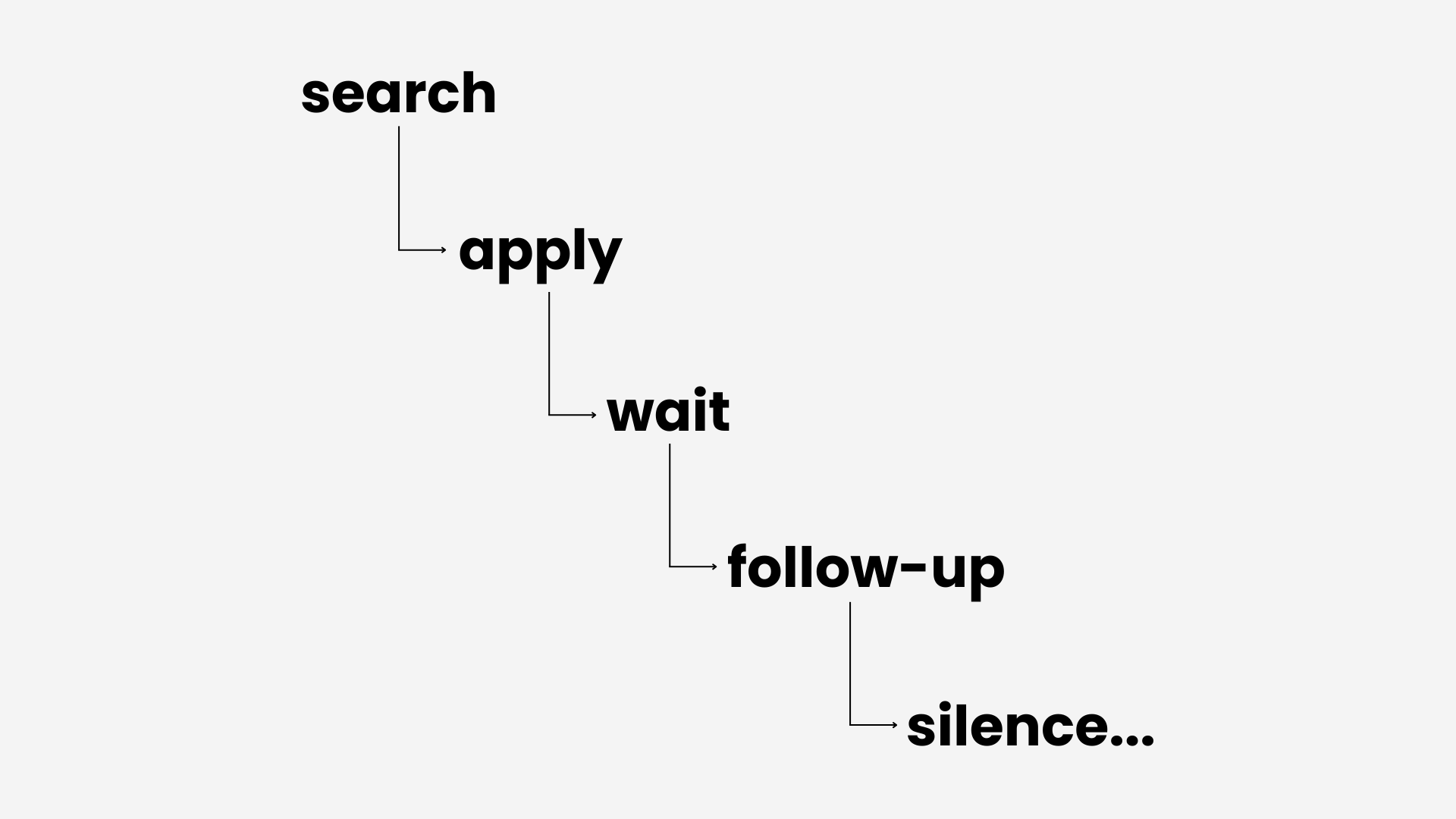
Participants described waiting without feedback as more stressful than receiving a rejection, leading to compulsive checking and emotional disengagement. Applicants struggled to understand how their information was evaluated, which reduced trust and increased self-blame.
“It feels like shouting into the abyss since I never hear back. How am I getting rejected in seconds?”
I chose user interviews in order to let job seekers talk freely about their issues and anything that would make them feel empowered. I found that transparency and emotional reassurance were critical in the job search at all stages.. This led to design choices that will highlight:
All job seekers are upset by their uncertainty with the current job market and can’t understand why they aren’t shortlisted for the jobs they’re clearly aligned with. LinkedIn is a common place to go to, but it’s getting too overwhelming with a lot of confusion as to what to do next to move upwards. The findings and interviews provide a foundation for designing solutions that reduce emotional and cognitive overload.
If I were to interview more people, I would expand on geographical and industry constraints to see if they could play a part in this as well. For example, if a participant in Massachusetts would have a different job searching experience from one in Texas even if they were in the same industry and searching for the same roles.